12 April 2026 · 6 min read
Why Catholic Women Wear a Chapel Veil
The practice is older than the rule that once required it, and it survived the rule's removal. A short account of where the chapel veil comes from and what it is for.
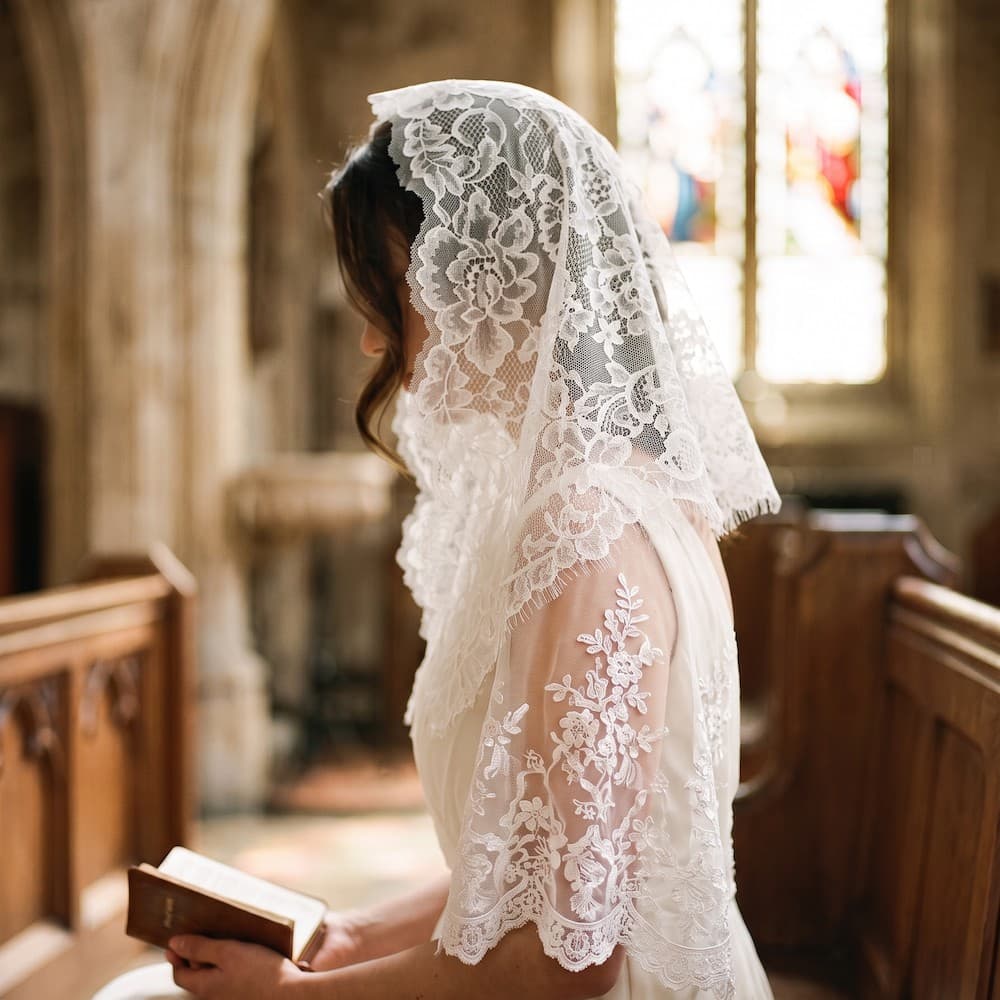
Ask why Catholic women veil and you will usually get one of two answers. The first is legal: canon law used to require it. The second is devotional: it is a gesture of humility before God. Both are true, and neither is quite the whole story.
The practice came first
St Paul writes about head covering in his first letter to the Corinthians, around the year 55. He is not introducing a novelty. He is arguing about how an existing custom should be understood, which tells you the custom was already there.
For most of the next nineteen centuries it simply was not a question. Women covered their heads in church because that is what one did, in Rome and Constantinople and Seville and, later, in Manila and Seoul.
Then the rule, and then not
The 1917 Code of Canon Law put the custom into writing. Canon 1262 said that women should have their heads covered in church, particularly when receiving communion. When the Code was revised in 1983, that canon was among the many that were simply not carried over.
This is worth being precise about, because it is often described as an abolition. It was not. The requirement lapsed. Nothing replaced it and nothing forbade it. What had been an obligation became a choice.
What survived
In much of the world the practice thinned out almost immediately. In others it never went anywhere: in Spain and Latin America, in the traditional communities, and among women who had covered their heads their whole lives and saw no reason to stop.
Since about 2010 it has been quietly returning, most visibly among younger women who never experienced it as a rule at all. That is the interesting part. A generation that has no obligation to veil, and no cultural memory of veiling, has taken it up as something freely chosen.
What it is for
The reasons women give tend to converge on something practical rather than theological. A veil narrows your field of vision. It lowers your gaze. It draws a boundary, and it makes that boundary visible to you every time you move your head.
Prayer is difficult because attention is difficult. Anything that quiets the periphery helps. That is what a chapel veil does, and it is why the practice outlasted the law that once required it.
If you are thinking about starting
There is no ceremony and no permission needed. Most women begin at a weekday Mass, where there is less to notice and less to be noticed.
Choose white or ivory if you want the traditional look, black if you would rather not stand out. Both are correct. Nobody is keeping score.